
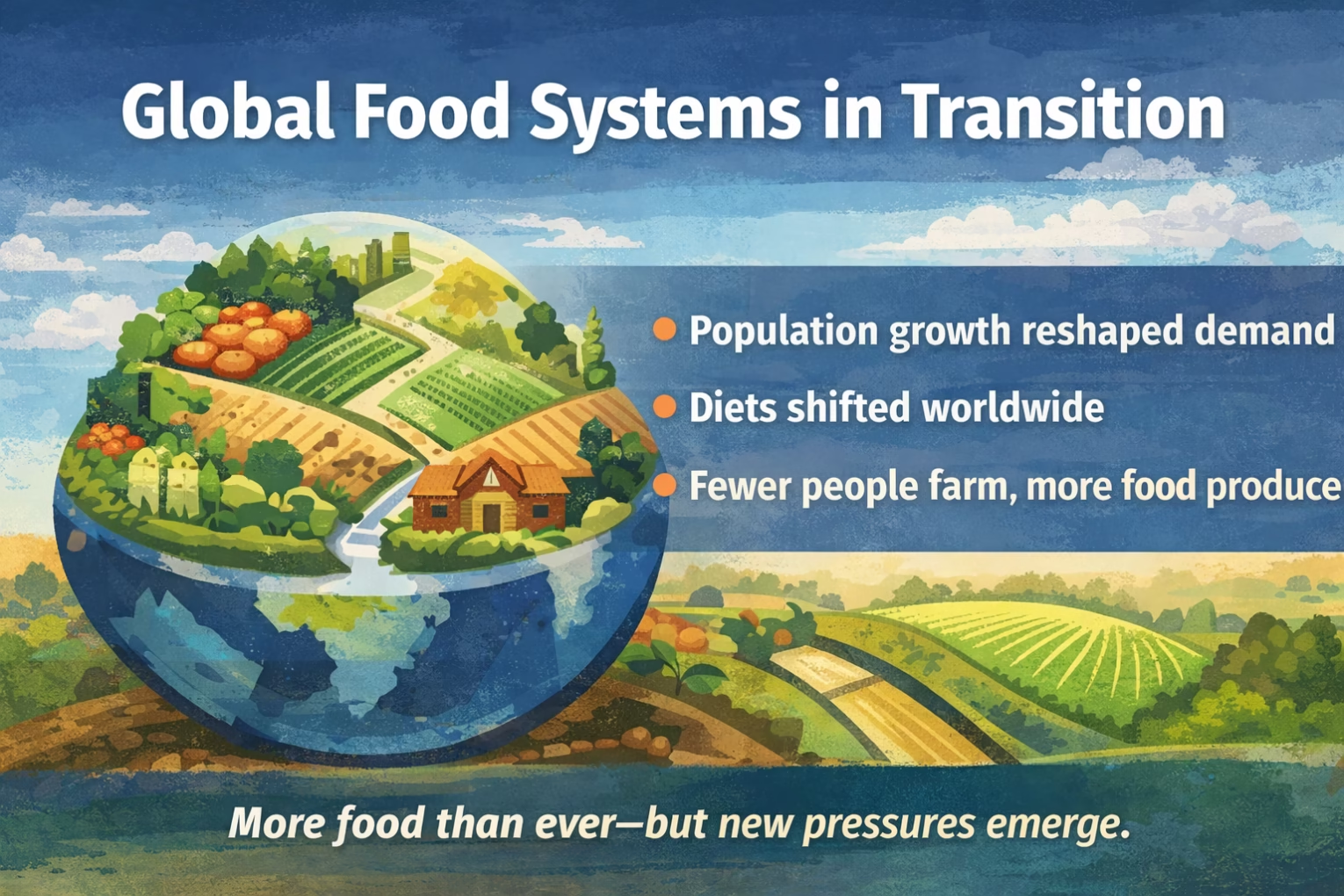
How population growth, nutrition patterns, and farm workforce shifts are reshaping global food systems from 2000 to 2024.
AI summary
- Demographic Driver: Global population growth remains the primary force expanding aggregate food demand, while urbanization shifts how that food is sourced and consumed.
- Production Paradox: Average calorie availability per person has risen, yet agricultural employment has shrunk as a share of the workforce due to mechanization and productivity gains.
- Dietary Shift: Rising incomes are driving a nutrition transition toward more animal proteins and processed foods, creating complex challenges for health and sustainability.
Chart
How population and agriculture reshaped global food systems
Intersection of growth, diet, and transformation.
Global food systems sit at the intersection of population growth, dietary change, and agricultural transformation. Since 2000, the world has added more than two billion people, while average calorie availability has increased and agricultural employment has steadily declined as a share of total jobs.
This shift reflects rising productivity, mechanization, urbanization, and changing diets. More people now live in cities than rural areas, and fewer workers are directly involved in farming. At the same time, global food output has expanded enough to raise average dietary energy supply per person.
These changes create tension. Higher output does not automatically translate into equal access, and a shrinking farm workforce raises questions about resilience, climate risk, and rural livelihoods. Understanding global food systems today requires looking at these trends together rather than in isolation.
Population growth and demand pressure
The primary driver of aggregate demand.
World population growth remains the most powerful driver of food demand. According to the United Nations and World Bank population data, the global population rose from about 6.1 billion in 2000 to over 8 billion by the early 2020s. Even with slowing growth rates, absolute numbers continue to rise, particularly in parts of Sub-Saharan Africa and South Asia.
Each additional cohort increases aggregate demand for cereals, proteins, fruits, and vegetables. As incomes rise, diets diversify. Demand shifts from staple grains toward meat, dairy, and processed foods, which require more feed, water, and land per calorie.
Urbanization reinforces this pattern. Urban households rely more on market-based supply chains rather than subsistence production. That dependence increases the importance of logistics, trade networks, and price stability within global food systems.
Primary sources: World Bank population data and UN demographic estimates.
Rising calorie supply per capita
Availability trends upward.
While population expanded, average dietary energy supply per person also increased. FAO Food Balance Sheets show that global per capita calorie availability has trended upward over the past two decades.
The table below summarizes selected global averages based on FAOSTAT Food Balance Sheets data.
| Year | Dietary Energy Supply (kcal/person/day) |
|---|---|
| 2010 | 2870 |
| 2015 | 2940 |
| 2019 | 2960 |
| 2020 | 2950 |
| 2021 | 2960 |
| 2022 | 2970 |
Source: FAOSTAT Food Balance Sheets — https://www.fao.org/faostat/
These figures reflect increased agricultural productivity and expanded global trade. However, they represent availability, not equal access. Food insecurity persists in many regions despite adequate global calorie supply.
Shrinking agricultural workforce share
Structural transformation in labor.
Another defining feature of modern global food systems is the declining share of workers employed in agriculture. Structural transformation shifts labor from farming into manufacturing and services as economies develop.
FAOSTAT and World Bank employment data show a clear downward trend in agricultural employment as a percentage of total employment globally.
| Year | Agricultural Employment (% of total employment) |
|---|---|
| 2000 | 40 |
| 2005 | 36 |
| 2010 | 32 |
| 2015 | 29 |
| 2019 | 27 |
| 2022 | 26 |
Source: FAOSTAT Employment Data — https://www.fao.org/faostat/ and World Bank World Development Indicators — https://data.worldbank.org/
This decline does not mean agriculture is shrinking in output. Instead, productivity gains allow fewer workers to produce more food. Mechanization, improved seeds, irrigation, and supply chain integration drive this shift.
Nutrition transition and diet diversification
Beyond simple calories.
Beyond calories, diet composition has changed. Rising incomes correlate with higher consumption of animal protein, edible oils, and processed foods. This nutrition transition alters agricultural demand patterns.
Livestock production has expanded significantly in emerging economies, especially in East Asia and Latin America. Producing meat requires feed grains, linking livestock demand to global crop markets.
Public health implications follow. While undernourishment persists in some regions, overweight and obesity rates have risen globally. Global food systems now face a dual burden: undernutrition and overnutrition coexisting across countries.
Data from FAO and WHO nutrition databases highlight this shift in diet quality alongside calorie growth.
Trade integration and supply chain risk
Connectivity and vulnerability.
Modern global food systems rely heavily on international trade. Major exporters of cereals, soybeans, and fertilizers influence price stability worldwide. Trade allows food-deficit countries to meet demand without expanding domestic land use.
However, trade dependence introduces vulnerability. Weather shocks, geopolitical disruptions, and export restrictions can quickly affect prices. The early 2020s provided examples of how concentrated supply chains amplify risk.
According to FAO and WTO trade statistics, a small group of countries accounts for a large share of global grain exports. That concentration makes resilience planning essential.
What this means for the future of global food systems
Efficiency, equity, and sustainability.
The interaction between population growth, rising calorie supply, and a shrinking agricultural workforce defines the modern era of global food systems. Output has expanded and productivity has improved, yet distribution challenges remain.
Future resilience will depend on climate adaptation, technological innovation, and balanced trade policy. Precision agriculture, improved storage, and reduced food waste can help bridge gaps between supply and access.
Global food systems are no longer only about producing more. They are about producing efficiently, equitably, and sustainably for a population that continues to grow and urbanize.
FAQ
Quick answers to common questions.
- What are global food systems?
They include production, processing, distribution, and consumption of food worldwide. - Has global calorie supply increased?
Yes, average dietary energy supply per person has risen since 2000. - Why is agricultural employment declining?
Productivity gains allow fewer workers to produce more output. - Does higher calorie supply end hunger?
No, availability does not guarantee equal access. - What drives diet diversification?
Income growth and urbanization shift consumption patterns. - How does trade affect food security?
Trade can stabilize supply but also introduces external risk. - Is farming output falling?
No, global production has increased despite fewer workers. - What is the nutrition transition?
A shift toward higher consumption of animal protein and processed foods. - Why does population growth matter?
More people increase aggregate food demand. - What risks face future food systems?
Climate change, supply chain concentration, and inequality.
Hashtags
Copy-paste friendly.
#GlobalFoodSystems #FoodSecurity #PopulationGrowth #Agriculture #NutritionTransition #FAOSTAT #FoodData #GlobalTrade #FarmWorkforce #SustainableFood #Demography #FoodEconomics
Sources
Primary datasets and references.

Discover more from ThePolymathPursuit
Subscribe to get the latest posts sent to your email.