
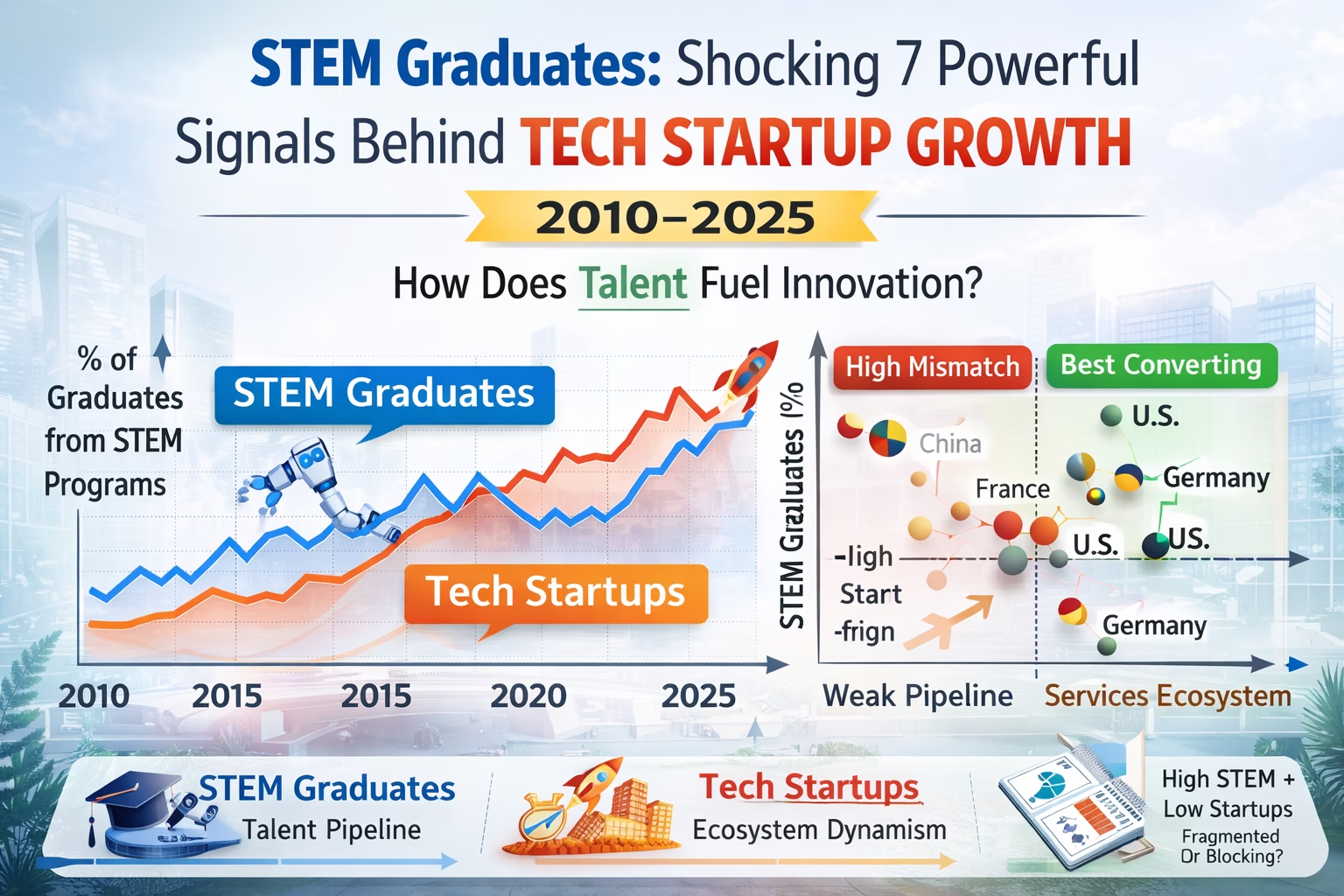
The innovation pipeline relies on a simple premise: educate talented people in science, technology, engineering, and mathematics (STEM), and they will build the next generation of tech startups. But from 2010 to 2025, the data reveals a more complex reality. High STEM graduation rates do not automatically guarantee high startup formation. Some countries produce millions of engineers but struggle with entrepreneurial density. Others have smaller talent pools but highly efficient tech ecosystems that rapidly convert graduates into founders.
This article compares STEM graduation shares with new business density across major economies. By tracking the relationship between human capital and startup growth, we uncover which regions are successfully monetizing their educational investments and where the innovation pipeline is leaking.
Data note: Charts utilize UNESCO/World Bank data for STEM graduates and OECD/World Bank databases for new business density and tech startup indicators.
AI summary
- Snippet: STEM graduation rates vs tech startup growth (2010–2025) reveals deep mismatches between talent supply and entrepreneurial output.
- The Core Premise: Human capital is the foundation of the tech sector, but it requires the right ecosystem (funding, regulations, risk tolerance) to transform into startups.
- Key Divergence: Some nations excel at producing STEM graduates but lag in new business creation, while others maintain high startup density with moderate graduation rates.
- Three visual cuts: STEM graduate shares over time, new business density trends, and a cross-section of how talent converts into entrepreneurship.
Innovation Pipeline Data
Defining the Innovation Pipeline
How talent translates into commercial impact.
The “innovation pipeline” is a framework for understanding how an economy generates technological progress. The input is human capital—specifically, graduates trained in Science, Technology, Engineering, and Mathematics (STEM). The output is the commercialization of that knowledge, often measured by new business registrations or tech startup formation.
For policymakers, the assumption has historically been linear: fund STEM education, and startups will naturally follow. However, the data from 2010 to 2025 shows that this pipeline is prone to blockages. If local capital is scarce, regulations are tight, or corporate salaries are too safe, STEM graduates will opt for traditional employment or emigrate rather than taking the entrepreneurial leap.
The STEM Graduation Surge
A decade of focusing on science and engineering.
The Startup Formation Gap
Why new business density doesn’t mirror graduation rates.
High Talent, Low Conversion
The paradox of engineering powerhouses.
High Conversion Ecosystems
Doing more with less.
The Role of Immigration
Importing the innovation pipeline.
Tech vs Traditional Startups
Nuance in the new business data.
The 2020 Pandemic Bump
A sudden shift in entrepreneurial density.
Analysis
The takeaway for policymakers and founders.
Frequently Asked Questions
Quick answers to common queries
Sources
Data and references used in this article
Short audio version of the blog:
Watch Video Below:
Made with NoteBookLM

Discover more from ThePolymathPursuit
Subscribe to get the latest posts sent to your email.
Gotta say, gigabetoriginal has got the authentic feel. If you’re looking for a more exclusive betting experience, this might be it. Check it out gigabetoriginal
If you’re into new and intriguing games, dream17game is worth checking out. They’ve got some fresh titles I haven’t seen anywhere else. Let the games begin dream17game
Betmex is my go-to for sports betting. Easy to use and good odds. Check em out if you wanna place a bet. betmex
Arinaplusapps? Nice! They claim to have the best deals. I’ll check them out now. arinaplusapps, here I come!
Arina plus reward? Sounds interesting! I saw some ads about it and the reward system seems pretty generous too. Maybe I’ll dive in this weekend at arina plus reward
Yo, G333game is the real deal! They have all the popular games. Worth checking out if you want some quick fun! Check it out here: g333game