
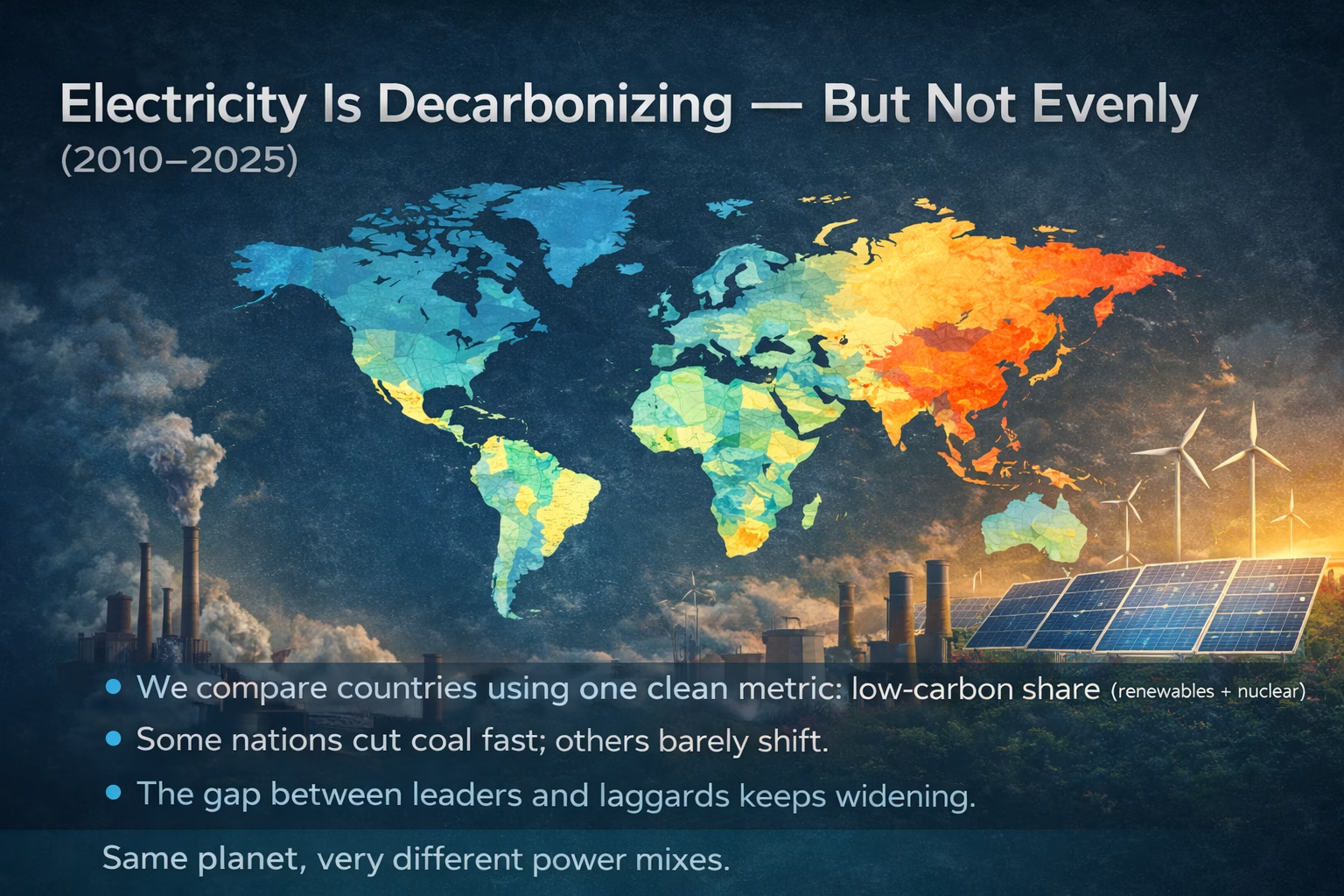
Electricity is where decarbonization either moves fast or barely moves at all. Since 2010, some countries cut coal hard and scaled clean power quickly. Others added renewables, but total demand rose so fast that fossil fuels stayed dominant. This article compares countries using a simple, comparable metric: the share of electricity coming from low-carbon sources (renewables + nuclear), and how that share changed over time.
Summary
The electricity transition is real, but uneven. From 2010 to 2025, low-carbon electricity rose in many places because wind and solar scaled hard. Still, some countries decarbonized much faster than others because coal fell and stayed down, grids kept pace, and policy signals didn’t flip every year.
- Low-carbon share is a clean way to compare systems without getting fooled by demand growth.
- Big jumps usually come from coal decline plus clean build-out at the same time.
- Wind and solar explain most growth after the mid-2010s.
- Nuclear can be decisive for reliability and low emissions in specific systems.
How the global electricity mix changed from 2010 to 2025
Coal was still the backbone of global power generation in 2010. After the mid-2010s, wind and solar costs fell and deployment accelerated.
By 2025, the global mix is more diverse. Coal remains large, but it’s under pressure in many regions. Renewables rise almost everywhere.
How we measure “decarbonizing fast” without playing tricks
We use one comparable indicator: the share of electricity produced from low-carbon sources (renewables + nuclear). Shares help compare systems even when demand grows.
- Low-carbon share up means the system is getting cleaner per kWh.
- Coal share down often drives the biggest visible gains.
- Starting point matters when comparing “fast movers.”
The fastest movers: what leaders tend to have in common
Fast decarbonizers usually do three things together: push coal down, pull renewables up, and prevent the grid and market rules from becoming the bottleneck.
- Stable build-out beats sudden bursts followed by policy pauses.
- Coal retirement schedules matter more when they are credible.
- Transmission decides whether renewables get used or wasted.
Nuclear’s role: not the headline, but sometimes the difference
Nuclear doesn’t look like a “fast growth” story globally, but it can be a stabilizer. When nuclear output drops unexpectedly, emissions can rise because something dispatchable fills the gap.
The laggards: why coal stays dominant in some systems
Many coal-heavy systems face pace problems: demand rises quickly, grids are constrained, and financing is expensive. If clean supply doesn’t scale faster than demand, the fossil share stays high.
Before vs after: what a real shift looks like
A real shift is visible: coal shrinks and stays down, while clean sources fill the space. If coal drops briefly and rebounds, low-carbon share stalls.
Renewables growth: why wind and solar did most of the heavy lifting
Wind and solar scaled because they’re modular and fast. Integration is the new challenge: if grids can’t absorb output, curtailment rises.
Policy and grid constraints: the hidden speed limits
Many systems hit a grid wall: permitting is slow, connection queues grow, and local opposition blocks lines. Market design matters too—flexibility must be rewarded.
How to read the rankings without misunderstanding them
Rankings simplify a messy world. A country already clean in 2010 may not show huge gains by 2025, while a coal-heavy system can show big jumps from a low base.
Where electricity decarbonization goes next
The next phase is harder. Cheap renewables replacing the worst coal plants is already happening. What comes next is deeper system work: transmission corridors, storage scaling, flexible demand, and reliability planning that doesn’t default to fossil backup.
Frequently Asked Questions
- What does “low-carbon electricity” include?
Renewables (wind, solar, hydro, geothermal, bioenergy) plus nuclear. It excludes coal, oil, and gas. - Which countries decarbonized fastest since 2010?
Typically those that combined coal decline with sustained renewables build-out; use OWID’s low-carbon share chart to rank by change. - Why can renewables rise while coal stays dominant?
If demand grows faster than clean supply, or if grid constraints force curtailment, fossil generation keeps filling the gap. - Does a cleaner mix always mean lower total emissions?
No. Total emissions depend on total generation and wider electrification, but emissions per kWh usually fall with a cleaner mix. - What role does nuclear play?
Stable low-carbon output that reduces fossil backup during low wind/solar periods. - Why are grids so important?
Without transmission and flexibility, new renewables can’t be delivered and used reliably at scale. - What is curtailment?
When available renewable electricity is not used because of grid or system constraints. - Why does coal fall faster in some places?
Credible policy (retirement schedules, carbon pricing), economics, and grid readiness speed the decline. - What helps integrate high renewables?
Storage, interconnections, flexible demand, fast-ramping resources, and market design that rewards flexibility. - What should policy focus on next?
Transmission + permitting, predictable clean auctions, flexibility incentives, and reliable coal retirement pathways.
Hashtags
#electricitymix #decarbonization #lowcarbonpower #renewables #coaldecline #energypolicy #powergeneration #cleanenergy #gridinfrastructure #nuclearenergy #energytransition #energydata
Sources
- Our World in Data — Electricity Mix: https://ourworldindata.org/electricity-mix
- Our World in Data — Share of Electricity from Low-Carbon Sources: https://ourworldindata.org/grapher/share-electricity-low-carbon
- IEA — Global Energy Review 2025 (Electricity): https://www.iea.org/reports/global-energy-review-2025/electricity
- Our World in Data — Energy: https://ourworldindata.org/energy
- Our World in Data — CO₂ and Greenhouse Gas Emissions: https://ourworldindata.org/co2-and-greenhouse-gas-emissions
- Our World in Data — Electricity from Fossil Fuels: https://ourworldindata.org/grapher/share-electricity-fossil-fuels
- Our World in Data — Electricity from Renewables: https://ourworldindata.org/grapher/share-electricity-renewables
- Our World in Data — Electricity from Coal: https://ourworldindata.org/grapher/share-electricity-coal
- Our World in Data — Electricity from Nuclear: https://ourworldindata.org/grapher/share-electricity-nuclear

Discover more from ThePolymathPursuit
Subscribe to get the latest posts sent to your email.
Downloaded the 89betapp last week. Interface is smooth, and I like the mobile experience. Seems like they have a decent range of games. Definitely worth checking out if you’re looking for a mobile-friendly option. Get it at 89betapp
[4165]toto987 | Link Alternatif Resmi & Slot Gacor Deposit Pulsa,toto987 menyediakan akses login resmi dan link alternatif aman. Nikmati berbagai slot gacor hari ini dengan kemudahan deposit pulsa. Daftar sekarang juga! visit: toto987
Really impressed with the variety of games available here. Everything feels very secure and professional. I am sticking with loginkratonbet.
Everything about this site feels very professional. The bonuses are fair and the registration was a breeze. Glad I stumbled upon mx789mx during my search.
I love the variety of slots available here. There is always something new to try and the jackpot feels reachable. Big fans of hbo9slot
Yo, 8jili! Definitely a site I’d recommend! So many fun and unique options. What are you waiting for? Check it out! A guaranteed good time: 8jili.
777cbgameapk has got to be one of my favorite online gaming site out there! There’s some real potential here. Give it a shot! You won’t be disappointed: 777cbgameapk.
567zkgame is great! The interface is so easy to use. Give it a whirl! You might be surprised how easy it is to win. Check it out: 567zkgame.
y888com showed up in my suggestions. Gonna peek at the landing page to see what’s up. Check It out: y888com
Been trying to log into x777login. The interface is alright, loading a bit slow tho. Check it over at x777login
vg70game, huh? I saw an ad for that. Looks like a fun way to kill some time. Might give it a download. See what’s happening at vg70game
Yo, check out boss88online! It’s my go-to spot for some serious gaming action. Been hitting it up lately and the payouts are legit. Definitely worth a look! Find it here: boss88online
I’ve been seeing a lot about G888win and its popularity is well deserved. The interface is easy to use and I’ve had a great time with their available games, check it out! g888win
I’ve played on Jogabet a bit and their variety of games is really nice. If you’re looking for a place to spend some time and try new games you should check it out. jogabet